Monday-Friday 7 AM to 5 PM

Tree Library

Learn about common tree species in our service area. Understanding your trees helps you make informed decisions about their care, maintenance, and long-term health.

Fir

Fir

Abies

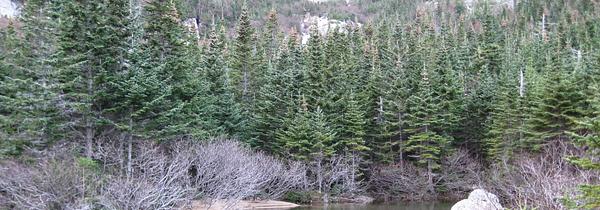
This is a genus to admire. All firs have an erect, noble habit that’s both formal and easygoing. It has a dignified outline, but it still somehow blends admirably into a more relaxed landscape. The more we learn, the more enthusiastic we become about the landscape attributes of the fir! Firs are inclined to a more northerly distribution, and most native firs do not do so well south of zone 5. There are, however, some Asian Firs that are proving their mettle in the mid-Atlantic region. Take a look at our specific fir options. We’re sure you’ll find something to get excited about!

Elm (Triumph)

Elm (Triumph)

Ulmus x ‘Morton Glossy’

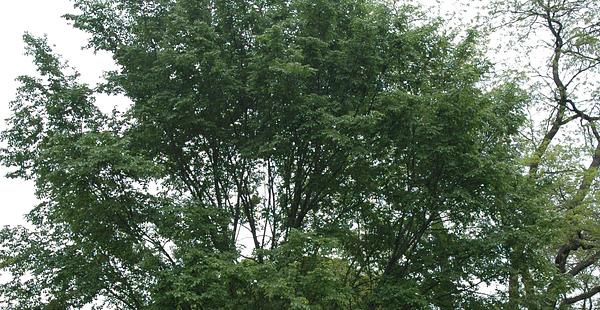
Most fast-growing trees are fraught with problems, but the triumph elm is a notable exception. Place this tree in a difficult location where a lesser tree would curl up its root tips and die. Be prepared to watch it triumph! In addition to tolerating dry and compacted soils, this tree is resistant to Dutch Elm Disease, Elm Leaf Beetle, Elm Yellows, Phloem Necrosis, and many other problems that plague most elms. The habit is reminiscent of our native American elm but with a finer texture. As always, plant responsibly. The triumph elm can become quite large. Be certain the site is suitable for the tree. This tree has the foliar appearance of ash trees and makes an excellent replacement for Emerald Ash Borer victims.

Dogwood (Yellow Twig)

Dogwood (Yellow Twig)

Cornus sericea “flaviramea”

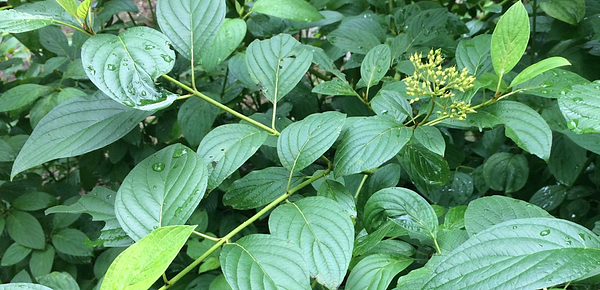
Yellow twig dogwood is a shrub dogwood with rich summer foliage and excellent fall color. If cut to the ground every spring, the one-year-old stems maintain an eye-catching yellow-green in the wintertime. The showy white panicles of the late-spring flowers turn into an even showier summer fruit. The flowers attract butterflies, and the berry drupe fruit attracts birds. Yellow twig dogwood has a stout constitution and will grow in very inhospitable conditions. The habit is loose and rounded with horizontal branches at the base of the trunk. If unpruned, yellow twig dogwood will grow 6 feet or 8 feet high and wide. An alternative is to maintain it as a small shrub of about 4 feet by coppice pruning. Coppice pruning involves cutting a woody plant to ground level every one to two years. While this eliminates the flower and fruit attributes, the stems will provide a fantastic show in the drab winter landscape, as noted above. The new growth will also appear more rapidly in the spring, giving you a plant with four-season appeal.

Dogwood (Kousa)

Dogwood (Kousa)

Cornus kousa

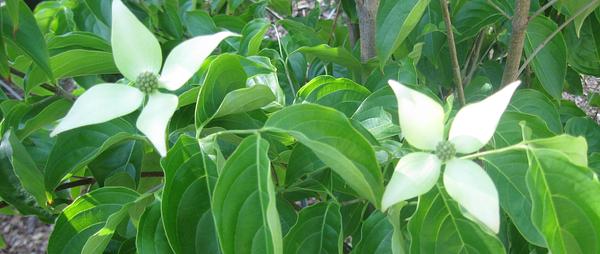
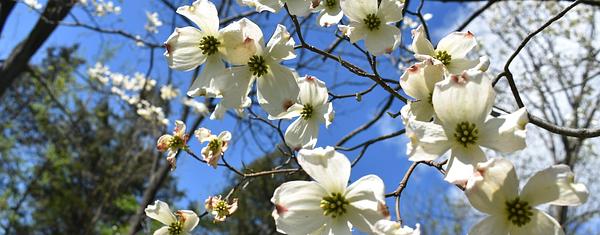
Kousa dogwood is an elegant tree. It has an exquisite trunk and bark with a diverse pattern of gray, tan, and brown that gets more beautiful as the tree ages. The flowers are lovely in burgundy, red, and orange fall colors. Sometimes you get all three on the same plant! The kousa dogwood is much more amenable to culture than our native flowering dogwood. It tolerates adverse conditions better and is resistant to many of the pests and diseases that plague the flowering dogwood, including dogwood anthracnose. Mature height is 25 to 30 feet with a spread of 15 to 30 feet. The kousa tolerates shade quite well but will flower less conspicuously there than in full sun.

Dogwood, Japanese Cornel

Dogwood, Japanese Cornel

Cornus officionalis

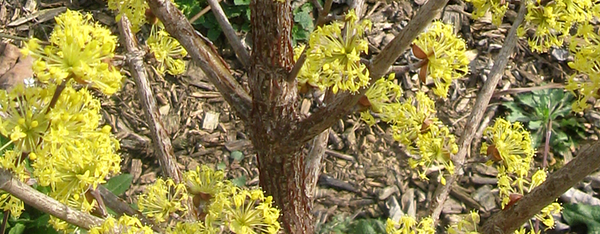
Check out this one, a tree that begins blooming in late winter to early spring, sometimes pushing out it’s cheery color even before the snow is gone! Sure, it can’t compete with the showy blossoms of mid-late spring but coming when they do, brightening up the drab winter landscape, they’re simply fantastic. Unfortunately, it’s rarely seen in contemporary landscapes which is unjustifiable, given its pleasant ornamental attributes and tough constitution. The foliage is a rich green and free restant to fungal diseases. Even the bark is handsome! To get the best effect of the spring flowers and handsome bark, situate it in front of a dark green, fine textured conifer such as oriental spruce.

Dogwood

Dogwood

Cornus

Dogwoods are first-rate plants. Is it too much to say that every garden should have one? This of course begs the question. Which one? By far the most popular is the flowering dogwood. However, we have mixed feelings about this one. At its best, flowering dogwood is a stellar performer in every season, but it struggles with insect and disease afflictions that often keep them from performing at their best. Dogwood anthracnose, powdery mildew, and several leaf-spot fungal diseases plague the foliage, and dogwood borers often invade the bark and stems. While all these pests can be managed, flowering dogwood is clearly a high-maintenance plant, working against our goal of sustainability. Still, when spring brings the dogwood blooms, we’re tempted to make an exception for them. The kousa dogwood is an excellent substitute. Although it doesn’t offer an early spring show, it more than makes up for it with the cream-colored flowers in May. These blooms are accented by the rich green foliage, which serves as a backdrop. The bark is exquisite, and the fall color is almost a match for the flowering dogwood’s. The Japanese cornel is another exciting plant, largely due to its flowering pattern. While the individual flowers are not spectacular, the fact that they grow in such profusion and arrive in late winter or early spring gives them a distinct advantage as the herald of the spring season. We’re especially enthused about the “Lemon Zest” cultivar, which has larger, showier flowers and, as the name suggests, a soft lemon fragrance. Then there are the shrub dogwoods, most of them cultivars of Cornus serica, the redosier dogwood. The one-year-old stems are very ornamental, and common practice is to cut these plants back to the ground every spring, resulting in a mass of red or yellow stems that flaunt their beauty the following winter.

Bald Cypress

Bald Cypress

Taxodium Distichum

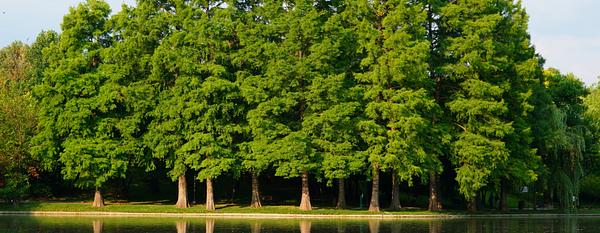
Although native to the southeast, this tree is hardy enough for northern Maine! The bald cypress grows in swamps and can thrive in year-round flooded areas, but it also survives in dry and compacted soils. Like the dawn redwood and larches the bald cypress is a deciduous conifer, shedding its needles every autumn. The fall color is a pleasing orange, and the reddish to grayish brown bark contributes to winter interest. It grows 60 feet to 70 feet high and 25 feet to 30 feet wide. Bald cypress is a specimen tree with unique features, not the least of which are the protruding “knees” that grow around the tree in highly compacted or wet soils. These are areas, in fact, where few other tree varieties would thrive, much less grow additional features. The “knees” are very attractive, especially when combined with other landscaping features. Bald cypress trees constitute an excellent choice for a deciduous conifer for parks or large lawns, especially those near bodies of water.

Cherry (Indian)

Cherry (Indian)

Frangula caroliniana

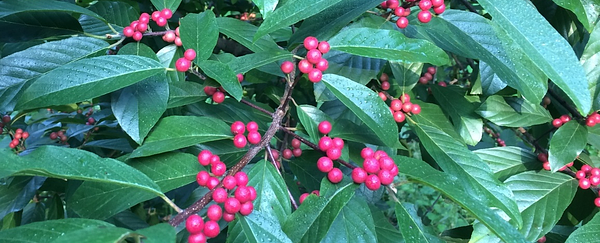
What a fantastic plant is the Indian cherry! Lush foliage, striking late-summer fruit, and brilliant fall color are the ornamental features of this small native tree. The Indian cherry tolerates difficult growing sites extremely well, and birds love the fruit. The flowers may be visually unremarkable, but you will know when the plant is in bloom! The area around the tree buzzes with activity as each pollinator rushes in for its share. The Indian cherry grows 10 to 15 feet tall with an equal spread. Excellent as a specimen anchoring small shrubs and perennials, this tree should not be crowded with other plants of the same size. You do not want this one hidden in the landscape! Its shade tolerance also makes it useful in a woodland garden or as an understory tree. Plant it with the knowledge that you are contributing to a complex, beneficial biological community. The Indian cherry is also sometimes known as the Carolina buckthorn because it was originally discovered in South Carolina.

Buckeye (Yellow)

Buckeye (Yellow)

Aesculus flava

The Yellow Buckeye, or Aesculus Flava, is a lovely, large shade tree with an upright-oval habit and several outstanding traits. The rich green foliage, with each leaf composed of five leaflets that are 4 inches to 6 inches long, is more disease-resistant than most other Buckeyes. The cream-colored flowers of early summer show up after most other plants have finished their floral displays. With irregular, gray-colored plates and bold texture, the bark remains interesting year-round. The largest of the native Buckeyes, Aesculus Flava is widely considered to be one of the most beautiful and trouble-free as well. The Yellow Buckeye is a tree with an outspoken statement. While it can be placed in a grouping, the best use is as a specimen tree on the front lawn. Yellow Buckeye grows to about 80 feet high and 40 feet wide, and the bold framework forms a majestic silhouette during the dormant season.

Red Buckeye

Red Buckeye

Aesculus pavia

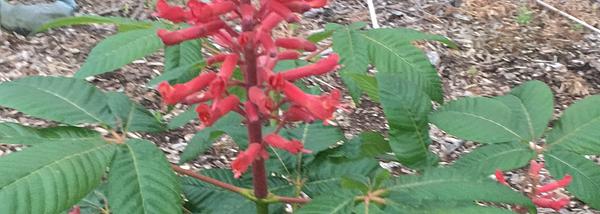
Blooms are king on the red buckeye! The emerging blossoms are pink but develop into brilliant red flower clusters by May. Formed of individual flowers that are 1 inch to 1.5 inches in diameter, these attention-grabbing flower clusters are 6 inches to 10 inches in length. The foliage, with each leaf formed of five to seven leaflets that are between 3 inches and 6 inches long, is a rich green from spring into early summer. By midsummer, however, the Red Buckeye is gradually retreating from the stage, and by early fall, the leaves are brown and shedding. Don’t let that stop you. The spring show more than makes up for it! Red buckeye is a small tree that grows to about 30 feet high and 20 feet wide. It prefers partial shade in moist, well-drained soil but will tolerate full sun, is pH adaptable, and will grow in a variety of soil types. Use this tree in woodland or naturalized areas as a specimen, along ponds and streams, or in a wildlife garden. With red buckeye, the possibilities are endless!

Sweet Birch

Sweet Birch

Betula lenta

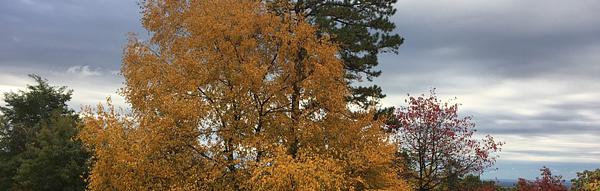
The sweet birch thrives high in the mountains often in dry, difficult conditions. Common in the wild, it is rarely offered in nurseries. People often focus on birch trees with showy bark at the expense of the sweet birch. However, the rich summer foliage and golden fall color are reasons enough to invest in this fine tree. The sweet birch shows high resistance to Bronze Birch Borer and Birch Leaf Miner as well as tolerance for urban conditions and difficult growing sites. Also, the stems give off a pleasant wintergreen aroma when they are bruised as an interesting side note. Sweet birch is also a long-lived tree with the oldest known specimen dated at 368 years old. It grows 40 feet or 50 feet high. The sweet birch puts on an unrivaled fall show and should be planted where this can be fully enjoyed, such as among evergreens or other deciduous trees with orange and red fall color. A restful landscape scene often requires a mixture of both flamboyant and unassuming trees.

Birch (River)

Birch (River)

Betula nigra

The River birch is a reliable, vigorous performer and one of the most adaptable and trouble-free members of the genus. Commonly found on stream and river banks in the eastern deciduous forest, it usually grows with multiple stems; however, single-stem specimens are less susceptible to breakage when mature. The cream-colored bark of the young tree ages to a pleasing exfolioating brown-salmon color. For some unexplained reason, the tree is often marketed as a small to medium sized tree and consequently, is often found crowding its 50? high and wide bulk against house or patio. The fall color is a respectable yellow. A great companion plant for this tree is the Sweetbay, especially the “Moonglow” cultivar. The glossy, broad-leaf, semi-evergreen leaves of the Sweetbay enhance the year-round appeal of the River Birch bark. Consider plant shrubs with red and/or orange fall color beneath the River Birch to accent the bark and the fall shades. Dark green conifers make a spectacular back drop.

Birch

Birch

Betula

Say the word birch and the mind goes to the multi-stem groves of white-barked birches in our northern hardwood forests. But those of us who live too far south (zone 6 or more) for paper birch to thrive are left with one of two choices: try to coax the paper birch into performing or settle for second best; a birch with a more modest stem display. For sustainable landscapes, the second is usually the better option and fortunately, we have a few good choices. First are the river birch cultivars. In youth, some of them almost rival the paper birch in white bark display. ‘Heritage’ used to be the old stand-by until about 20 years ago when ‘Dura-heat’ invaded the market. One of the newest cultivars, ‘City Slicker’, shows signs of possibly being the best yet with its ivory colored young bark, excellent heat resistance, and yellow fall color. Within ten years, however, even the most white-barked river birch selections gradually revert to the characteristic exfoliating grey-brown-cream colored trunks; still attractive but not white. When we can look past our white-bark obsession, we’ll notice a couple of other birches worthy of consideration: sweet Birch and yellow Birch. These two birches will outperform river birch in dry locations, and sweet birch has phenomenal fall color and glossy copper stems in youth. Yellow birch fall color is almost as stunning and the bark of some individuals are silver-gold. Neither of these trees has any significant insect or disease problems.

Beech (American)

Beech (American)

Fagus grandifolia

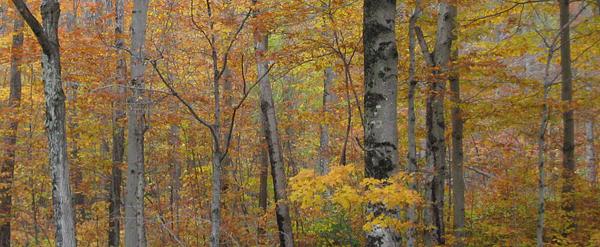
This tree is majestic and durable. With smooth, grey bark and beautiful bronze fall color, the American Beech grows up to 80 feet tall and 50 feet wide. Beechnuts mature in the fall and are edible. The obvious use for American beech is as a specimen. However, utilizing it in groupings with other conifer evergreens is very attractive as well. Another option is to plant a grove of only American beeches for a truly awe-inspiring scene. The foliage is especially beautiful in spring and fall, and the silver-gray trunks also provide beautiful winter interest as well. This species is perfect for use in large parks and lawns where the noble outline can be best appreciated. The American beech has proven to be a very valuable tree for medicinal purposes, serving as a remedy for a variety of aches and illnesses. Beech bark and leaves contain a substance effective for ulcers and reducing the inflammation of dysentery. Leaves are also soothing to the nerves and stomach. A tonic can be made from beech leaves that cleans the digestive system and stimulates the appetite. Additionally, the American beech can be used to create herbal medications to improve diabetic conditions and can be formulated into a chewing tar that soothes chapped lips and relieves gum pain. Native Americans have used water found in hollow areas of decaying American beech trees to cure scrapes and skin disease.

Italian Alder

Italian Alder

Alnus cordata

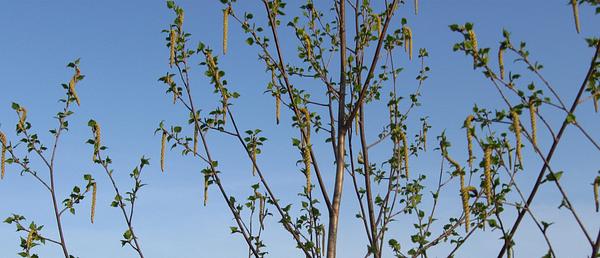
Native to the island of Corsica as well as southern Italy, the Italian Alder is best known for its beautiful foliage that glistens lush and green even during drought conditions. The bark and branching structure provide striking winter interest. Durable and trouble-free, the Italian Alder is well-suited for even the most difficult soil conditions and is underused in this regard, being one of our best drought-resistant trees. It normally grows 40 feet to 50 feet high and can grow almost an equal width. You may want to position your Italian Alder so as to accent the pyramidal shape during the dormant season. Placing it against the sunset horizon is one good choice. Because the foliage remains a lush green into the autumn, blending it with brilliant fall-color trees provides a pleasing contrast. It’s a wonderful addition to any garden!